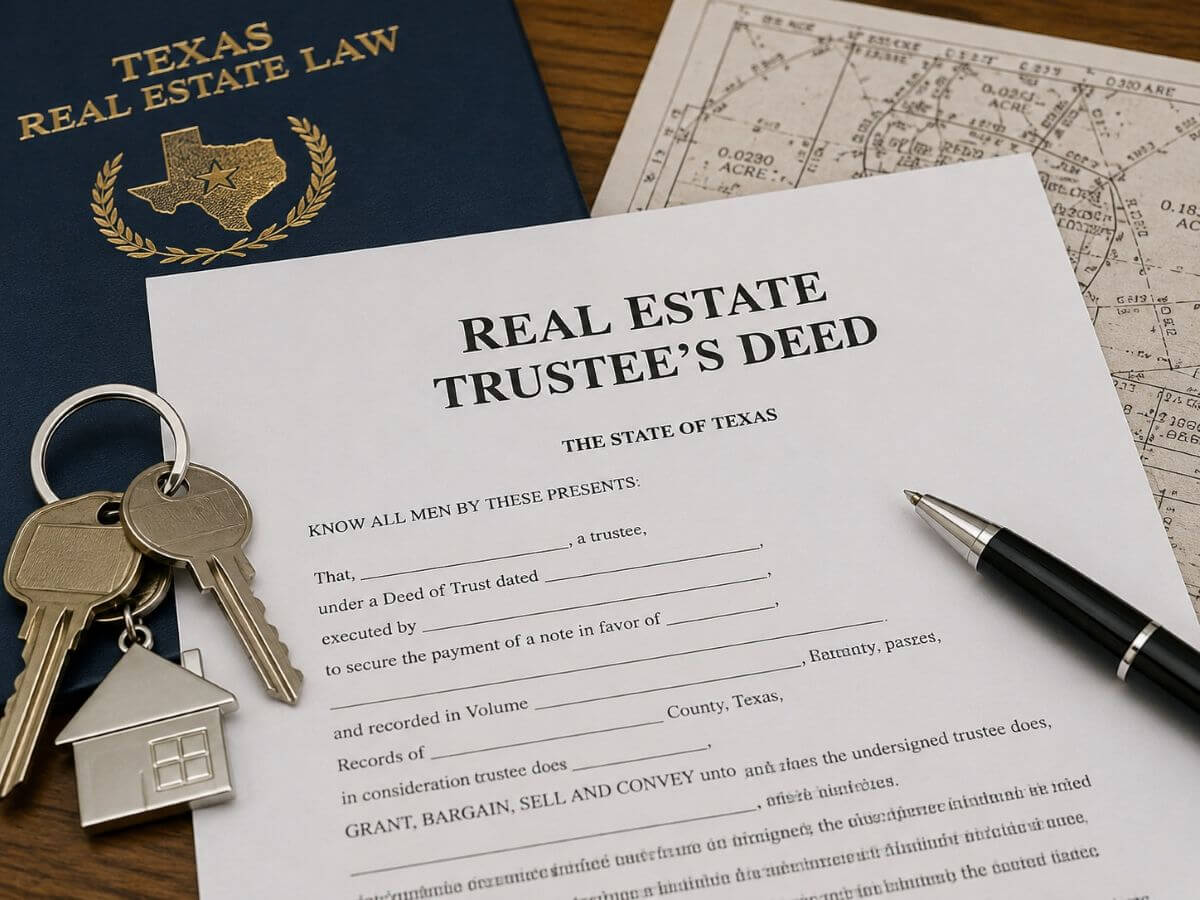
A trustee’s deed carries a lot of weight and gets almost no attention until it lands in your lap. Maybe you bought a property at a foreclosure auction. Maybe you inherited a house that was sitting in a family trust. Either way, the document transferring that property to you is probably a trustee’s deed, and it does not work the way a general warranty deed does.
Here’s what it is, why it shows up, and what you should check before you sign anything or wire any money.
What Is a Trustee’s Deed?
A trustee’s deed is a deed signed by a trustee instead of by the property owner directly. The trustee is a person with legal authority to transfer the property on behalf of someone else. That authority comes from a written document, usually a deed of trust or a trust agreement.
In Texas, you’ll run into two common versions.
The first is a foreclosure trustee’s deed, issued after a lender forecloses through the trustee named in a deed of trust. You’ll often see this one called a substitute trustee’s deed. The second is a trust trustee’s deed, used when the trustee of a living trust or family trust sells or transfers real estate the trust owns.
They share a name and a basic mechanic. Someone other than the titled owner has the power to convey the property. But the situations behind them are completely different and mixing up the two causes real problems.
One thing is worth knowing up front. Most trustee’s deeds in Texas transfer property without the warranties you’d get in a standard sale. No promise that the title is clean. No guarantee against old liens or claims. You get whatever the trustee had the right to convey, and nothing more.
Reasons a Trustee’s Deed Is Used
The most common reason in Texas is foreclosure. Texas is a non-judicial foreclosure state, so a lender usually doesn’t have to sue you in court to take back a property. The deed of trust you signed at closing already gave a trustee the power to sell the home if you defaulted.
When that sale happens, the process runs on a strict schedule:
- The lender sends a notice of default and gives the borrower time to catch up.
- If the default isn’t cured, a notice of sale goes out at least 21 days before the auction, as required under Texas Property Code Section 51.002.
- The sale takes place at the county courthouse.
- The winning bidder receives a substitute trustee’s deed after paying.
That’s the version most El Paso buyers and investors deal with, and the El Paso County courthouse sees these sales month after month.
The trust version matters too, especially for families. Say a parent set up a living trust and put the family home into it to keep the property out of probate. When that parent passes, the successor trustee can sell or transfer the home using a trustee’s deed, without waiting on a probate court to sign off. That speed is often the whole reason people put property in a trust to begin with. It keeps the transfer private and moves the deal along.
Why a Trustee’s Deed Matters
The type of deed you receive changes what you’re getting. And a trustee’s deed comes with more risk than most people expect.
Because these deeds usually carry no warranties, the burden shifts to you. If there’s a second lien on a foreclosed property, an unpaid tax bill, or a boundary dispute nobody mentioned, that becomes your problem the moment the sale closes. Buyers at foreclosure auctions get burned by this constantly. They see a low price, assume they’re getting a steal, then learn the property still has debt riding on it.
Then there’s the question of authority. Did the trustee have the legal right to sign? In a foreclosure, that means every notice requirement was met and the sale followed the deed of trust to the letter. In a trust sale, it means the trustee was properly appointed and the trust document truly allows the sale. If any of that was handled wrong, the deed can be challenged in court, and your ownership sits on shaky ground.
A few things are worth confirming before you rely on a trustee’s deed:
- Whether the property carries surviving liens or unpaid taxes
- Whether the foreclosure or trust transfer followed Texas law
- Whether the trustee had clear authority to convey the property
- Whether title insurance is even available on it
None of this should scare you off. Trustee’s deeds are legitimate and change hands every day across El Paso County. The catch is that they move fast and offer thin protection. So, the smart play is to check the fundamentals before the deed gets filed at the county clerk’s office, not after you’ve already handed over your money.
Talk to an El Paso Real Estate Attorney Before You Sign
If a trustee’s deed is part of a purchase, an inheritance, or a foreclosure you’re facing, have a real estate attorney look at it before you commit. A quick review now costs far less than untangling a bad title later.
Winton Law handles real estate law right here in El Paso, TX, and we can walk you through what a trustee’s deed means for your specific situation. Call, text, or write to us, and let’s make sure the property you’re getting is the property you think you’re getting.
Winton Law El Paso P.C.
1533 N. Lee Trevino Suite 201
El Paso, TX 79936
915-201-2633
Hours: Monday – Friday 8:00AM to 5:00PM by appointment only
Disclaimer: Every effort has been made to ensure the accuracy of this article at the time it was written. It is not intended to provide legal advice or suggest a guaranteed outcome as individual situations will differ, and the law may have changed since publication. Readers considering legal services should consult with an experienced lawyer to understand current laws and how they may affect your case.